
 Made in the USA
Installation, Operation and Maintenance Instructions Multi-Pump, Single-Stage Models
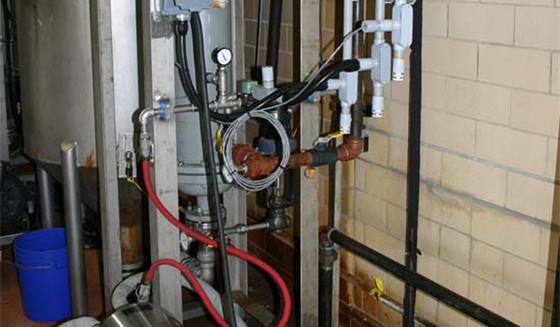
All the INSTALLATION, OPERATION AND MAINTENANCE INSTRUCTIONS for single pumps also apply to duplex, triplex and quadplex pump models. These multi-pump models are composed of individual, single-stage pumps which have vacuum intakes piped in parallel. There are some unique instructions that apply to these models, and they are described below:
Arrangements: The most common Lyco, multi-pump arrangement is a duplex model where two pumps are vertically stacked, one on top of the other, in a compact package. Of these, the most popular is the 20HP package (2-10HP) model. These usually include: A duplex separator/muffler for the exhaust and a duplex manifold for the vacuum intake. Separator/mufflers are often fitted with a 50% recirculation fitting, and intake manifolds often include a vacuum relief valve and vacuum gage.
Another popular arrangement is a horizontal, duplex model where two, close-coupled pumps are mounted back to back on the same base. These usually include two separator/mufflers, one for each pump, and the pump intakes are generally manifolded together in the field. The base arrangement is designed so it can be mounted on a Lyco recirculation tank. This is also a common approach which doesnʼt require separator/mufflers.
Triplex and quadplex models are similar in arrangements to vertical, duplex models with a quadplex looking similar to two vertical duplex models attached side by side.
The following general comments apply to all of these models:
Controls: Each pump in the package requires a starter. All pumps can be started and run at the same time, or they can be staged in response to process demands, or one or more can be run with others being used as standby.
Where staged or standby applications are employed, check valves must be installed in the intake of each pump so air will not be drawn through the pumps that are idle. Also in these cases, alternating controls are desirable so operating times for all pumps in the package are evened out.
Vacuum and exhaust lines: To reduce vacuum piping losses, intake manifold piping should be sized to have a minimum cross section area equal to the sum of the intake openings for all of the pumps in the package. For a duplex manifold, this is a 2.5" dia. tube or pipe which has a cross section area comparable to two 1.5" dia. pump intake openings. For other multi-pump combinations, see “Vacuum Piping".
Exhaust lines should be amply sized so there is minimum back pressure on the pumps. Vacuum pumps are designed to discharge into atmospheric pressure, and back pressure can significantly increase motor operating amps and put extra stress on pump rotors, shafts and bearings.
To avoid excessive back pressure, lines connecting to separator/muffler openings (air discharge on top and liquid drain on the bottom) should not be sized smaller than these openings. Also when these openings are manifolded, piping should be sized to have a minimum cross section area equal to the sum of the areas of all the openings being manifolded.
Pump cavitation should be avoided since this puts extra stress on pump rotors, shafts, bearings and motors. Cavitation sounds like nuts, bolts and screws violently rattling around inside the pump. It can be eliminated by proper setting of vacuum relief valves, or by bleeding air into the vacuum line, or by avoiding excess service liquid, or by installing drain piping to each pump to relieve unusually large quantities of liquid entering the pump package from the process.
Contact the factory if you have any questions on this.
Maintenance: The largest pump in a Lyco multi-pump package is 10HP. These pumps are compact and light enough to be easily handled and transported within a plant. For this reason, they can be readily removed to the maintenance shop for fast repair on a shop bench where all tools and parts are easily accessible. Unlike larger, heavier pumps, they donʼt have to be repaired on-the-job where quarters are cramped and repairs are often difficult and slow.
This concept allows a module approach to pump repairs in critical applications. A spare pump can be stocked in the maintenance shop for a quick change out while the pump being replaced can be returned to the shop for repair on a non emergency basis. Contact the factory for special pricing on standby pumps.
Lyco pumps are designed to be easy to field repair. They can be readily disassembled and reassembled without the need to reset clearances between the rotor and the porting plate if you follow instructions in section “Pump Disassembly and Shaft Removal”. The main point is “DONʼT TOUCH THE TWO ADJUSTING SETSCREWS (31).”